
Energy Audits · Kansas City Metro

Every leak has a story.
Curtis writes up the evidence.

Real thermal scans, real case files, real savings — written up here so you can see exactly what's costing you money before Curtis ever shows up at your door.

247+Cases Solved
$1.2MClient Savings
$1,800Avg. Saved / Yr
● Case File Open The Energy Sleuth evidence board — case files, thermal photos, and clues pinned together
The Investigation Log

THE CASE FILES

Every entry is a real investigation from the field — thermal scans, findings, and the fix, all written up in one place.

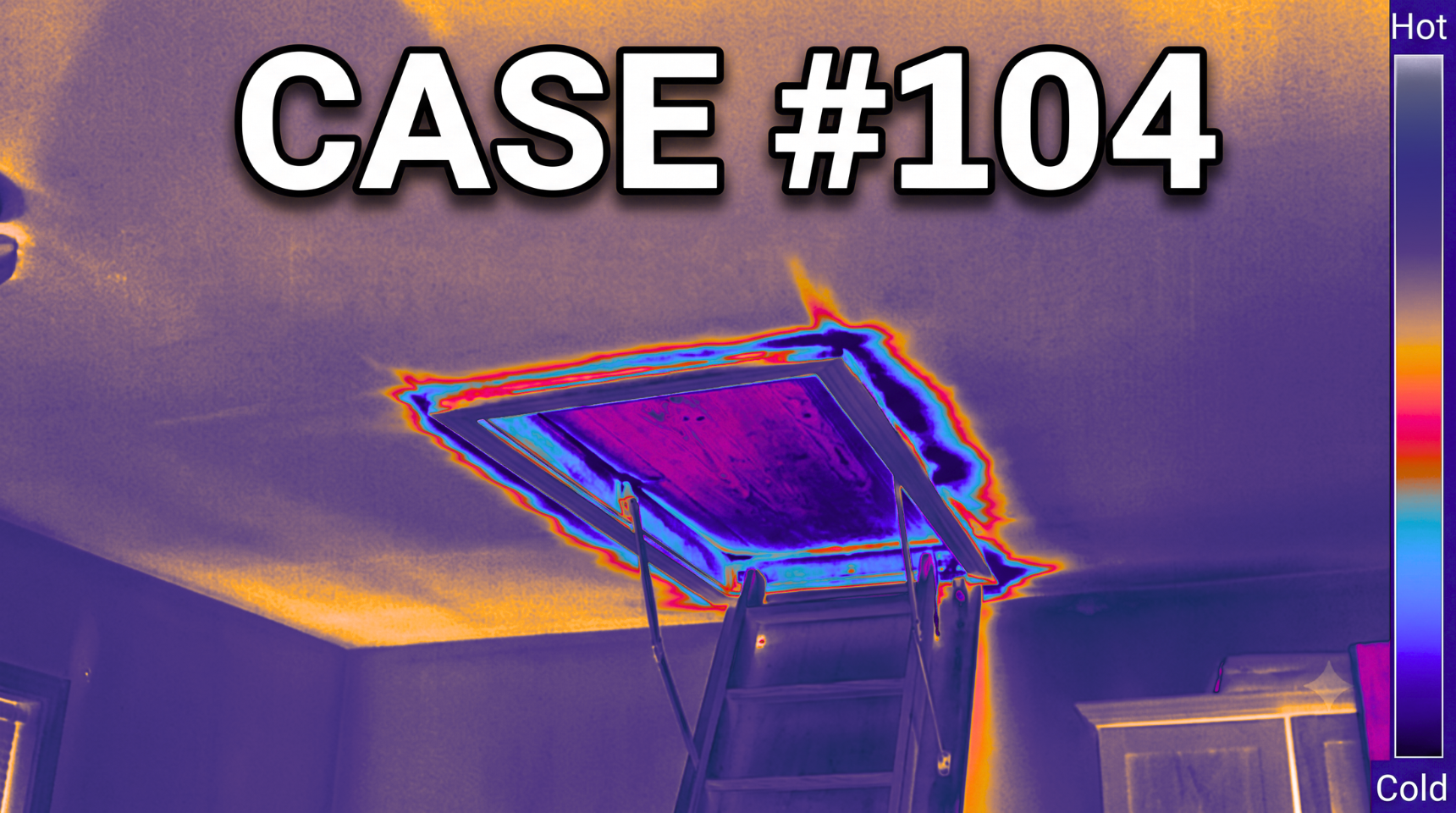
Thermal scan of Case #104 attic access hatch showing heat loss around the frame
Case #104 · Residential

The $4,000 Draft: Live Thermal Hunt in a 1985 Ranch Home

A 1985 ranch with high bills and cold floors. Curtis's thermal scan turned up 18 separate infiltration points, most of them right at the attic hatch.

📖 6 min read2 weeks ago
Read the full case notes

We opened Case #104 on a cold morning after the homeowner said their heating bills had crept up for years with no clear cause. The thermal camera told a different story than the furnace repair estimate they'd already gotten: 18 infiltration points, most concentrated around an unsealed attic access hatch. Foam-sealing the top plate penetrations and weatherstripping the hatch cost $340 total. Payback: five weeks.

How to Read a Thermal Image: The Complete Beginner's Guide — technician reading a thermal scan on a tablet
Field Guide · Evidence Explained

How to Read a Thermal Image: The Complete Beginner's Guide

No engineering degree required. Curtis breaks down what every color in a thermal scan actually means, and why orange is the color that costs you money.

📖 5 min read1 month ago
Read the full case notes

A thermal camera photographs heat, not light, and every shade in the image is a clue. Bright white and yellow mean critical heat loss — missing insulation or a major gap that needs fixing immediately. Orange marks a major leak, usually air infiltration at a penetration. Red is a moderate leak or thermal bridging through framing. Purple is a minor variance worth monitoring. Blue and black mark cold zones, often at floor perimeters where exterior air is getting in. Curtis reads these images the way a detective reads a crime scene — every color narrows down where the money's going.

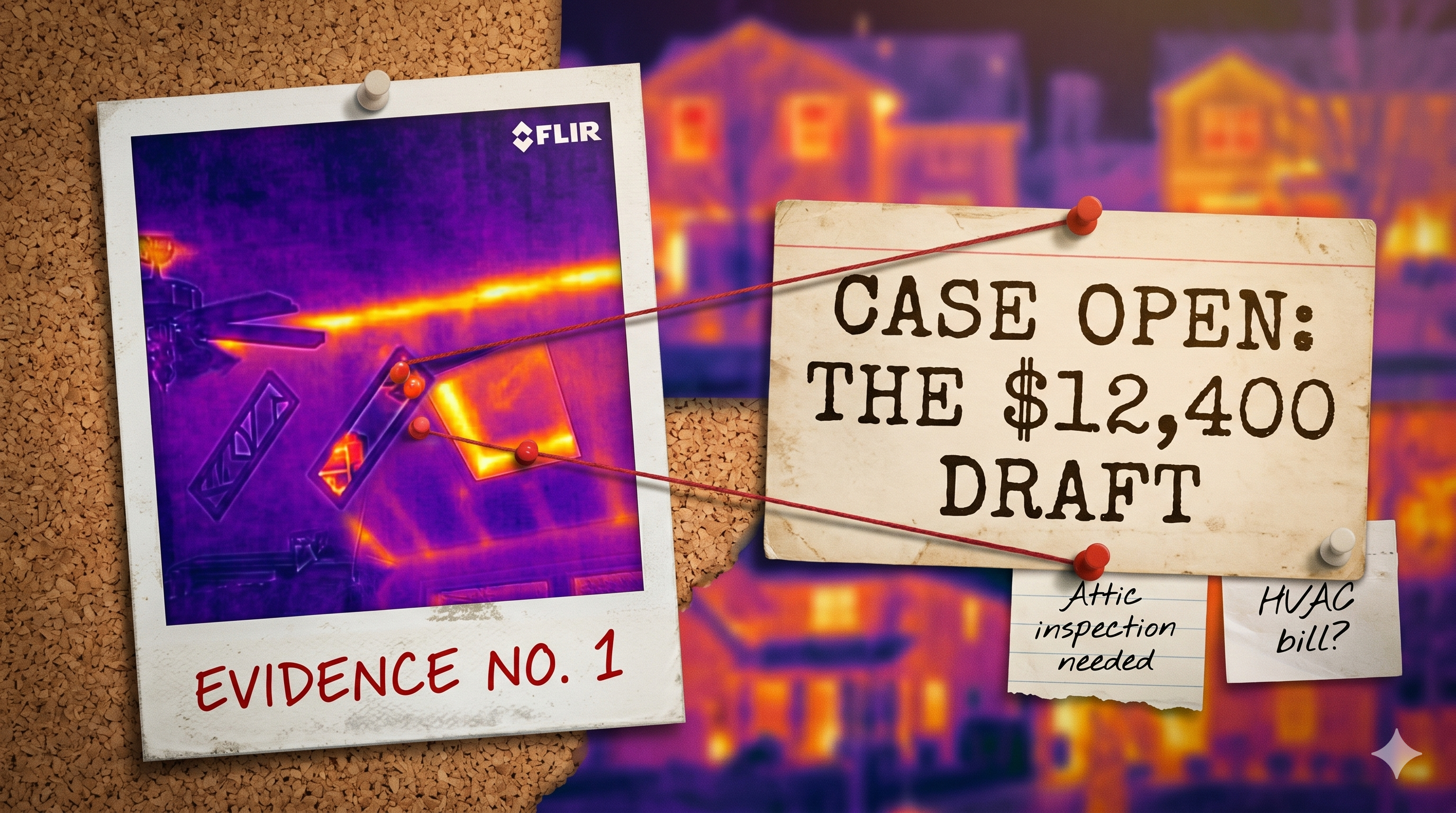
Case Open: The $12,400 Draft — thermal scan evidence photo pinned to a corkboard
Case #127 · Commercial / Multi-Family

The $12,400 Draft: What We Found in a Multi-Family Complex

A large multi-family complex with an HVAC system working overtime. The thermal scan showed massive air infiltration across the entire ceiling plane.

📖 7 min read6 weeks ago
Read the full case notes

We opened Case #127 on a cold Tuesday after the client said their heating bills had doubled in three years. The attic told the whole story: infiltration across the entire ceiling plane, unit after unit, all feeding into an HVAC system that had been fighting a losing battle since day one. Estimated annual cost of the leak: $12,400. Attic remediation and access-point sealing are underway, with a full re-test scheduled once the work is complete.

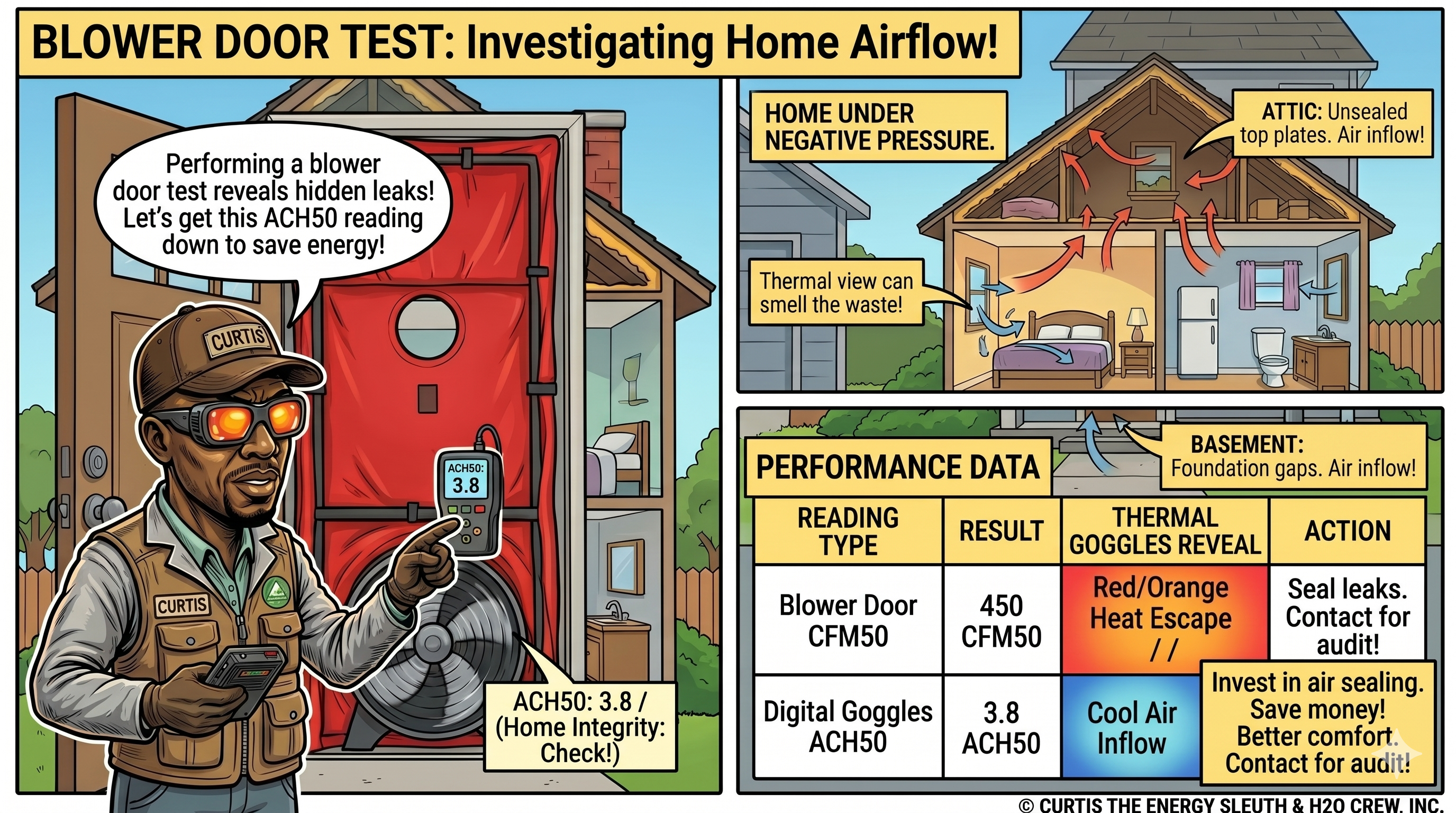
Blower Door Test 101 comic-style guide showing Curtis running a blower door test and reading thermal goggles
Field Guide · Tools Explained

Blower Door Test 101: How We Find Every Air Leak in Your Home

Most homeowners have never heard of a blower door test. By the end of this one, you'll understand why it's the most important diagnostic tool in energy auditing.

📖 4 min read2 months ago
Read the full case notes

A blower door is a large, calibrated fan mounted in a doorframe. It pressurizes the whole building to 50 Pascals — roughly like a 20 mph wind hitting every surface at once — and measures exactly how much air is escaping, in CFM50. It's completely non-destructive: nothing gets opened, drilled, or damaged. The fan runs, the numbers come back, and Curtis knows within minutes whether a building is tight or bleeding money.

5 Air Leaks You Can Fix Yourself This Weekend (Save $400+) thumbnail
DIY Tips · Homeowner Fixes

5 Air Leaks You Can Fix Yourself This Weekend (Save $400+)

The quick wins any homeowner can tackle with a $20 tube of foam sealant — and the three fixes that actually need professional equipment.

📖 3 min read3 months ago
Read the full case notes

Not every leak needs a professional. Weatherstripping attic hatches, caulking baseboard gaps, foam-sealing rim joists, sealing electrical and plumbing penetrations, and adding a door sweep are all weekend jobs with a $20 tube of sealant. What you can't fix yourself: duct leakage in unconditioned spaces, missing wall-cavity insulation, and anything requiring a pressure diagnostic to even locate. Those need Curtis's equipment to find safely — DIY sealing them blind usually wastes the sealant and misses the real leak.

$$$ Energy Leak Calculator

HOW MUCH ARE YOUR LEAKS COSTING YOU?

Move the sliders. This estimate is powered by Curtis's field data from 247+ audits — most owners are surprised by the number.

Annual Theft
$0 per year lost to leaks
Monthly Loss
$0 stolen every month
10-Year Total
$0 lost over a decade
THREAT LEVEL — LOW
🔍 Get Curtis to Find Your Real Number

Estimates based on Curtis's field data from 247+ audits. Actual losses vary by building — a real audit gives you exact numbers.

Witness Statements

WHAT CLIENTS SAY

Sworn testimonies from property owners whose cases Curtis cracked.

// WITNESS #047 · VERIFIED ✓

"I'd been paying $380 a month in heating bills for 6 years. Curtis ran his blower door and in 3 hours found 14 leaks I never knew existed. My bill dropped to $210 — first month."

Marcus T.Homeowner — Overland Park, KS
SAVED $2,040/yr
// WITNESS #089 · VERIFIED ✓

"Curtis found our HVAC units were cooling the attic, not the retail spaces. His duct report alone saved us from a $15,000 replacement that wasn't needed."

Diane R.Property Manager — KC Metro
SAVED $4,800/yr
// WITNESS #112 · VERIFIED ✓

"I'm a contractor — Curtis caught three insulation voids on a new build my crew missed. Now I use him on every project before drywall goes up."

Kevin L.General Contractor — Kansas City, MO
PREVENTED $6,000+ IN DEFECTS
🏅 BPI Certified
Energy Star Partner
🏛️ DOE Approved
Interview Room

FREQUENTLY ASKED QUESTIONS

No jargon — just straight answers.

How long does an energy audit take?

A typical residential property (2,000 sq ft) takes 3–4 hours. Commercial varies — a small office might be 4 hours, a warehouse 6–8.

What does an audit cost, and when does it pay for itself?

Residential audits typically run $300–$600. Most clients see payback in 3–8 months from reduced utility bills, sooner with rebates and tax credits factored in.

Does a blower door test damage anything?

No. It's a calibrated fan mounted in a doorframe that pressurizes the building to measure airflow. Nothing gets opened, drilled, or damaged.

Do you perform the fixes yourself, or just find the problems?

Curtis provides a detailed, severity-ranked report and works with a network of trusted contractors for implementation. You're also welcome to use your own contractor.

My house is brand new — do I really need an audit?

Yes. Curtis regularly finds construction defects in homes under a year old. Catching them early means builder warranty coverage before it expires.

Are there rebates or tax credits available?

Yes — federal tax credits can cover up to 30% of audit and weatherization costs, and most KC metro utilities offer additional rebates. Curtis provides documentation for all applicable programs.

Open a Case File

FILE YOUR REPORT

Every day you wait, the energy thieves steal more. Curtis responds to all inquiries within 24 hours.

📍 Kansas City Metro Area & Surrounding Regions
📺 youtube.com/@CurtisTheEnergySleuth
⏱️ Response time: under 24 hours