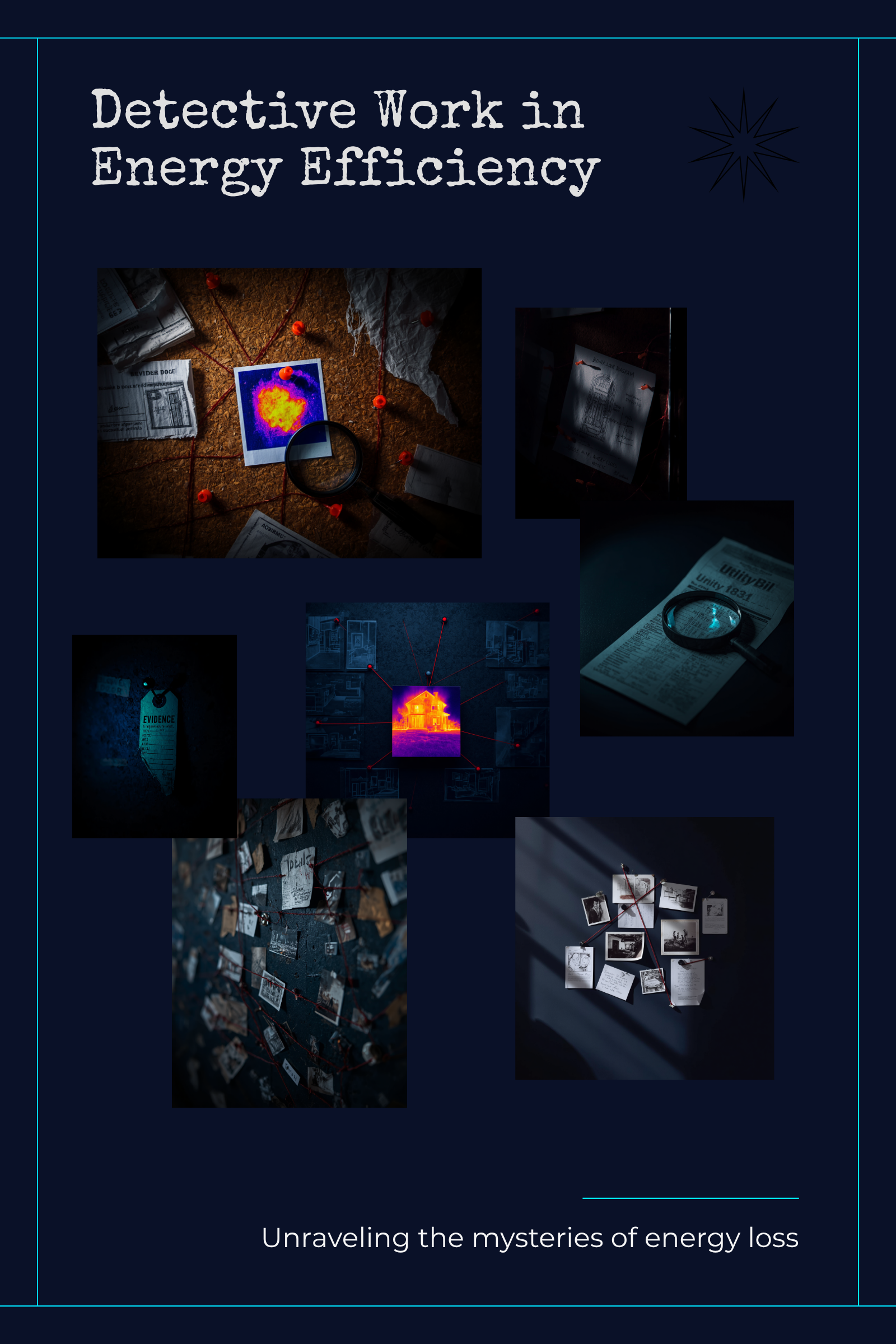
A building manager glances at the utility bill, shrugs, and files it under "just the cost of doing business." No complaints, no red flags, nothing broken. Case closed — or so it seems.
Curtis doesn't buy it. In this file, a routine records check on a property with a "clean" energy history turns up a pattern that's been hiding in plain sight for years — and it isn't unusual. It's the norm.
Without a benchmark or a comparison file, a building's energy use is easy to mistake for normal. If the bill looks the same month after month, it feels stable — even when it's quietly excessive. Consumption stops being treated as a performance number and starts being treated as background noise, so nobody ever asks the obvious question: is this building running efficiently, or just running predictably?
There's a comfort in that predictability, too. As long as nothing's broken and nobody's complaining, energy performance slides down the priority list behind whatever's louder that week. Most cases like this only get reopened after a cost spike, a tenant complaint, or a compliance letter forces the issue — by which point the waste has had years to become part of the furniture.
Treating baseline performance as normal has a price, and it's rarely just the utility bill. That's the most visible casualty — budget disappearing into avoidable spend instead of funding upgrades, staffing, or anything strategic. Alongside it, every unnecessary kilowatt-hour adds to a carbon footprint that makes sustainability goals harder to hit and harder to defend.
Left unexamined long enough, the waste starts covering for other problems. Deferred maintenance hides behind it until a minor equipment issue becomes an expensive failure. The signals that would normally flag an underperforming system get buried in the noise. "Normal," in other words, is rarely neutral. It's usually expensive, emissions-heavy, and quietly limiting what the building could be doing instead.
Here's how Curtis spots a building that's underperforming before the client even knows there's a case to open.
| Sign | What It Means |
|---|---|
| Bills swing wildly month to month | Inconsistent consumption usually points to equipment cycling inefficiently, controls that were never tuned, or an operational issue nobody's caught yet. |
| Nobody can explain the usage | If your team can't say which systems, which hours, or which conditions are driving consumption, you're flying blind — and blind buildings don't make good decisions. |
| No benchmark in over a year | Performance drifts quietly over time. Without a regular comparison to peers or your own baseline, the drift stays invisible until it's expensive. |
Energy efficiency isn't only a cost story. Treated as a performance metric, it helps teams run systems more deliberately, extend equipment life, and cut down on wear and tear. It stabilizes temperature, lighting, and air quality for the people actually inside the building, and it reduces stress on critical systems — which means more room to adapt when conditions change.
Buildings that track this properly gain something harder to put a price on: visibility. They catch problems early instead of after they've become repairs, compare assets fairly, and justify capital decisions with data instead of assumptions. Instead of reacting to the bill after the fact, ownership starts managing performance on purpose.
Opening a case doesn't require a massive budget or a full overhaul. It requires a procedure.
Efficiency improvements rarely pay off just once. Better data leads to better decisions, and better decisions compound — equipment tuning uncovers scheduling fixes, scheduling fixes uncover smarter capital planning. Momentum builds in a way that's nearly impossible for a building managed on instinct alone.
The payoff extends past the utility bill, too: stronger asset value, a better reputation, more confidence from owners and tenants, easier regulatory compliance, and lower risk. In a market where sustainability keeps mattering more, a building that performs well isn't just cheaper to run — it's better positioned to attract and keep the people who matter most.
The scenario at the top of this file is the most common one Curtis sees: a building that works, bills that get paid, nothing obviously wrong. But "good enough" is usually just the point where the real inefficiencies start hiding. The question was never whether the building works. It's whether it's working as well as it could.
Energy performance isn't a case with a finish line — it's an ongoing practice of asking better questions and staying open to what the data says next. If you're ready to challenge your own baseline, the first move is simple: pull the utility data, see what it raises, and start the conversation about what's possible.
If you suspect your building is underperforming but don't know where to start, an energy audit is the fastest way to find out. The insights usually pay for themselves many times over.
📋 OPEN A CASE FILE →